

The Piedmont Virginia Community College (PVCC) Prison Creative Arts Project serves incarcerated students in correctional centers in Fluvanna, Buckingham, and Dillwyn. The project collects original writings and artworks from incarcerated students and then has other PVCC students turn those works into new, original theatrical productions.
The project started in 2022 with support from Virginia Humanities and has since served approximately 200 incarcerated students. The program has had a dramatic impact on students, both those whose stories are shared and those who perform them.
“Performing the words of someone who’s incarcerated was one of the most powerful experiences I’ve had as a student. It made me realize how much we have in common and challenged the assumptions I didn’t even know I was carrying.”
Theater Student and Performer
We wanted to know more about the program, who they serve, and how it started. So we asked project director Dr. Leonda Keniston a few questions.
First, tell me a little bit about PVCC’s Prison Creative Arts Project. What is it? How many people does it serve? What is its goal?
The Prison Creative Arts Project, managed by PVCC’s Division of Humanities, Fine Arts & Social Sciences, was a two-part initiative funded by Virginia Humanities and led by me in collaboration Ben Sloan, Professor of English, and Brad Stoller, Associate Professor of Theater and Drama.
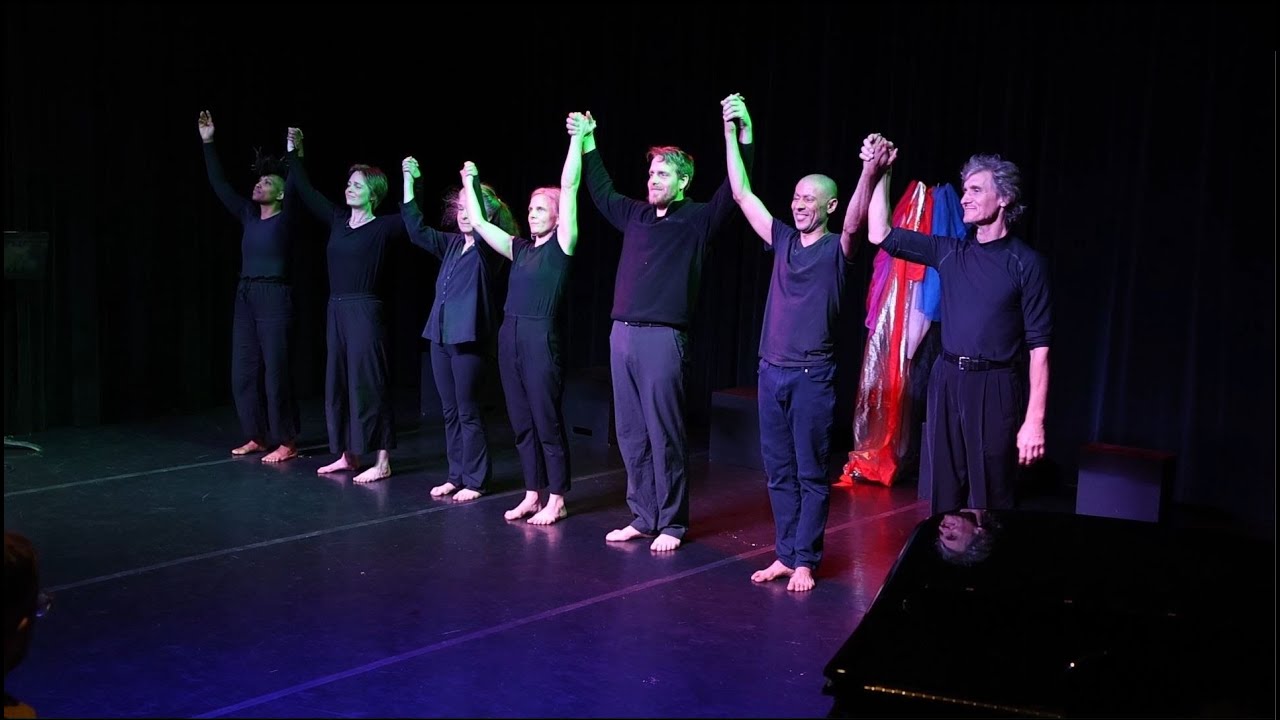
PVCC has served students who are incarcerated at the Fluvanna, Buckingham, and Dillwyn Correctional Centers since 2008. This project, which started in 2022, collected their original composition and literature writings and transformed them into four theatrical productions titled Flying in Place: Liberating Voices from Virginia’s Prisons.
The primary purpose of The Prison Creative Arts Project was to break down stereotypes about incarcerated individuals, foster dialogue, and highlight the integrity of the education the college provided in these facilities.
The secondary goal was to create a transformative space—through theater—where incarcerated voices were heard and valued, ultimately building a bridge between the public, PVCC students on the main campus, and those in prison.
How did the PVCC Prison Creative Arts Project get started? What was the inspiration?
Our inspiration came from multiple creative arts in prison programs across the country, including the Arkansas-based Prison Story Project, the University of Michigan’s Prison Creative Arts Project, the University of Denver’s Prison Arts Initiative, and Auburn University’s Alabama Prison Arts + Education Project. After learning about these programs—particularly through a Zoom conversation with Kathy McGregor, founder of the Prison Story Project—we saw the potential to create something similar in our own service region.
From there, we developed PVCC’s Prison Creative Arts Project to bring writing and performance-based art from students in nearby correctional centers into the public sphere .
How does the Prison Creative Arts Project help incarcerated individuals?
Students built their self-esteem, and developed personally, and for many, gained a stronger sense of self-worth by having their voices heard and their stories shared. By showcasing their work, the college connected them—through their words—with the larger college community and the public, helping to challenge misconceptions and foster greater understanding between them, PVCC students on the main campus, and the broader community.
“When my English professor told me that my essay was being performed at PVCC, I felt like I was part of a bigger community. It showed me that my story matters, and that people on the outside can see me as a person, not just as an inmate.”
PVCC Incarcerated Student
What led you to seek funding from Virginia Humanities for the Prison Creative Arts Project?
We sought funding from Virginia Humanities because the mission aligns closely with our goals for the Prison Creative Arts Project—using the humanities to foster dialogue, understanding, and community connection.
The support allowed us to expand creative opportunities for incarcerated students at the correctional facilities. With Virginia Humanities’ backing, we were able to develop a program that culminated in a series of theatrical performances that impacted perceptions (positively) of audience members.
The Virginia Humanities grant allowed us to accomplish work that would not have been possible otherwise. It funded a dedicated project coordinator to help plan performances, and coordinate with correctional facilities, and community organizations. The coordinator worked with others on campus to create a Prison Creative Arts Project website. We were able to cover travel costs for the theater faculty and actors to Fluvanna, Buckingham, and Dillwyn Correctional Centers.
We were also able to partner with Light House Studios to pay for two videographers and editors to create two Flying in Place documentaries. The grant also made it possible to host two panel discussions during Second Chance Month with honoraria for six panelists, bringing vital community voices into the conversation and greatly expanding the project’s reach and impact.
What’s one of the most common misconceptions people have about incarceration as it relates to education or the humanities?
I would say that one of the most common misconceptions is that incarcerated individuals are uninterested in or incapable of engaging deeply with education or the humanities.
Too often, (and unfortunately), people rely on media portrayals that depict prisons and their residents in narrow, negative ways, without ever having direct contact or communication with those inside.
In reality, incarcerated students are eager to learn, create, and share their stories, and their work through humanities based courses or experiences reveals remarkable insight, talent, and humanity.


